



Introduction
Many vessel operators regard cargo hold cleaning and underwater hull cleaning as separate, unrelated activities. In reality, they are two essential parts of a balanced maintenance program: one safeguards cargo quality and survey acceptance, while the other supports hydrodynamic efficiency, emissions compliance, and biosecurity. For dry bulk carriers calling at multiple ports and frequently changing cargoes, neglecting either task creates unnecessary commercial and regulatory risks. This article explains their different purposes, common scheduling errors, and practical planning principles for fleet managers and chief officers.
1. Cargo Hold Cleaning: Protecting Cargo and Passing Surveys
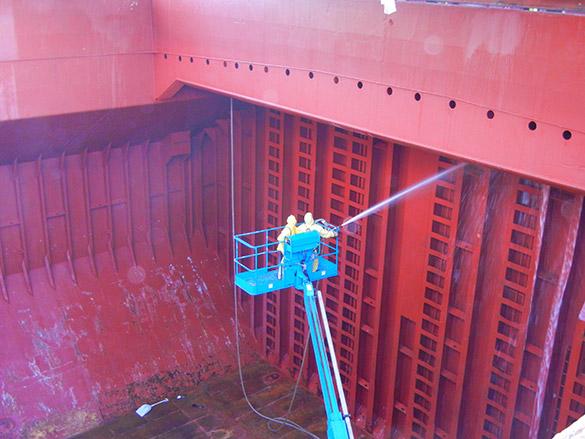
Cargo hold cleaning covers enclosed internal spaces, including frames, bilges, areas beneath the deck, and the undersides of hatches. Its primary purpose is to prevent contamination between bulk cargoes. Before loading grain, sugar, or animal feed after carrying coal, cement, or mineral concentrates, a vessel must remove fine dust, acidic residues, and ingrained stains. Even small amounts of remaining material can result in cargo rejection, claims from receivers, and expensive delays in port.
The required cleaning method varies according to the cargo. Certain residues must be neutralised before washing, while transitions to food-grade cargo require fresh-water rinsing, thorough drying, and careful inspection of concealed areas such as the backs of stiffeners and bilge wells. Inadequate cleaning can also speed up corrosion in the holds. Salt crystals, fertiliser dust, and acidic deposits gradually damage coatings, reducing paint service life and raising future repair costs.
Hold cleaning is generally carried out alongside during the turnaround between discharge and loading. The main risk is rushing the work to meet a tight laycan. A failed hold survey can cause more downtime than a thoroughly planned washdown.
2. Underwater Hull Cleaning: Efficiency, CII and Biosecurity
Hull cleaning targets the vessel’s submerged exterior, including the flat plating, sea chests, rudder and propeller. Marine biofouling begins as a thin layer of slime before developing into barnacles, tubeworms and algae. Even minor fouling increases frictional drag, raising fuel consumption and carbon intensity. Under current CII, ETS and local biosecurity requirements, hull condition is not merely an efficiency issue; it is also a compliance consideration.
Fouled hulls are also a major pathway for transporting invasive aquatic species. Many port states now regulate in-water cleaning to prevent fouling organisms from being released directly into local waters. Operators must therefore use approved cleaning methods and capture systems instead of uncontrolled diver scraping.
Unlike hold washing, hull cleaning is not required at every port call. Scheduling it at planned intervals helps balance fuel savings, coating protection and survey windows. Cleaning too often with abrasive methods can damage anti-fouling paint, while leaving fouling untreated for years can entrench high fuel consumption and poor CII ratings.

3. How to Coordinate Both Cleaning Activities in Your Fleet Plan
The most effective maintenance strategy integrates hold and hull cleaning schedules rather than addressing them only when problems arise.
- Use long sea passages to assess the underwater hull and determine whether cleaning should be scheduled at the next port call.
- Group voyages carrying heavy-residue cargoes so that deep hold cleaning can be planned predictably instead of requiring emergency washes.
- Do not schedule multiple high-risk cleaning jobs during the shortest port stays, when crew and contractor capacity is limited.
- Record both hold survey findings and hull performance data to identify the cleaning intervals that deliver the best results for each vessel.
This coordinated approach helps prevent two common problems: unexpected cargo hold rejections and the gradual rise in fuel consumption that may go unnoticed for months of voyages.
Closing Thoughts
Cargo hold and hull cleaning address distinct needs while advancing a shared goal: dependable, compliant, and cost-effective bulk shipping. Cargo hold cleaning protects the goods on board, while hull cleaning helps the vessel move through the water efficiently. Consistent planning for both can reduce claims, lower fuel expenses, and streamline regulatory reporting. Our integrated cargo hold cleaning solution enables safe, efficient hold preparation in line with standard maritime inspection requirements.

Post time: Nov-06-2026