



For bulk carriers and general cargo vessels, cleaning the cargo hold is significantly more than just a routine washdown. It serves as a crucial control point that directly influences inspection results, cargo quality, vessel availability, and charterer satisfaction. Many operators perceive hold preparation as a labor-intensive manual task and fail to recognize how mismatched or outdated tools can lead to hidden delays, safety risks, and expensive cargo contamination claims. This article examines how a coordinated set of marine cleaning equipment optimizes the entire hold preparation process, enhances crew safety, and enables vessels to consistently comply with stringent loading standards across various commodity trades.
1. The Hidden Cost of Inconsistent Hold Preparation
Charter party stipulations, surveyor criteria, and receiver expectations vary significantly from one cargo type to another. A hold that is deemed acceptable for mineral ores may not pass inspection for grain, feed, or food-grade cargo, even if there are minor traces of previous residues, loose rust scale, or leftover cleaning chemicals. Failed hold inspections necessitate re-cleaning, which consumes valuable laytime and may result in the vessel being off-hire. Disputes over contamination frequently lead to cargo deductions, insurance claims, and long-lasting harm to an owner’s commercial reputation.
Manual cleaning using basic hoses and hand scrapers often yields inconsistent results. Crew members working at elevated heights find it challenging to access deckheads, upper bulkheads, and hatch undersides. Stubborn residues, cement clinker, petcoke, and sticky bulk materials require extensive scrubbing. Slow cleaning processes also shorten the vessel’s port turnaround time, particularly when discharge and loading ports are on a tight schedule.
Safety risks present another significant issue. Cargo holds are classified as confined spaces. High-pressure water sprays can create slippery surfaces, and inadequate access raises the risk of falls. Makeshift tools often compel crew members to work from unstable platforms, while poorly managed wash water can overwhelm bilge systems or leave standing water that accelerates internal corrosion.

2. Mapping the Full Hold Cleaning
A dependable hold preparation sequence adheres to a logical top-down approach to prevent the re-contamination of surfaces that have already been sanitized. The workflow consists of distinct phases, each requiring specialized equipment:
1. Dry sweeping and mechanical descaling: eliminate loose cargo debris, peeling paint, and rust scale prior to introducing large quantities of water. This action prevents fine residues from being washed into bilge wells and obstructing drainage lines.
2. Chemical application: utilize compatible cleaning agents to dissolve stubborn stains and adhered cargo residues. Controlled spraying guarantees uniform coverage without wasting chemicals or harming hold coatings.
3. High-pressure washing: rinse dissolved residues from frames, bulkheads, hopper sides, and tank tops. Extended reach tools eliminate the necessity for repeated climbing.
4. Residue blasting: for substantial bulk deposits, a combination of water and air cleaning provides high kinetic energy to dislodge material from difficult-to-access corners.
5. Bilge water removal: continuously pump out wastewater during the washing process to ensure safe footing and safeguard drainage systems.
6. Final coating touch-up: following drying and inspection, apply touch-up paint to areas where the coating has been compromised during cleaning or cargo discharge.
Attempting to execute all these steps with only one or two basic tools leads to bottlenecks. A coordinated suite of equipment enables the crew to progress sequentially from one task to the next without experiencing downtime.
3. Equipment Selection: Tools should be tailored to the task, rather than the reverse.
Each tool within a cargo hold cleaning equipment suite has a specific function; the compatibility among tools is equally crucial as the performance of the individual items.
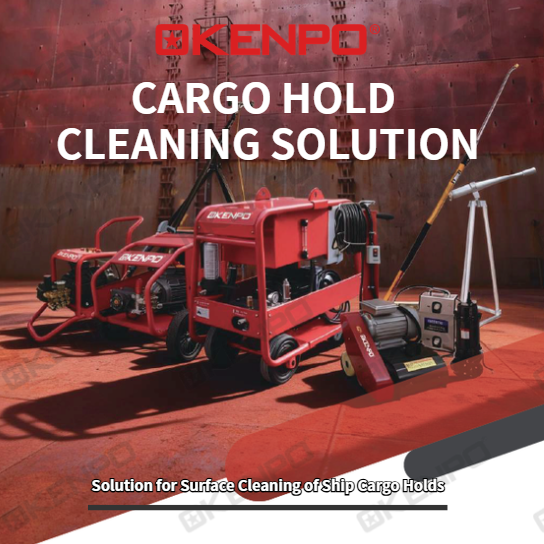
Please consult our list for assistance in selecting a comprehensive set of equipment: Complete Marine Cargo‑Hold Cleaning Solution
4. Practical Advantages of a Unified Cleaning Suite
When vessel operators procure disparate and uncoordinated tools from various suppliers, compatibility issues frequently arise. Hoses, couplings, pressure ratings, and power requirements may not be compatible, leading to wasted time during crucial port operations. A cohesive package designed specifically for marine applications offers several distinct advantages.
Firstly, crew training is streamlined. Tools utilize uniform connection standards and safety features, thereby minimizing operator mistakes. Secondly, maintenance becomes more manageable. Operators need to maintain fewer types of spare parts, and technical support is centralized with a single supplier instead of multiple vendors. Thirdly, the entire system is tailored to the power and compressed air supplies available on board, preventing overloaded circuits or inadequate performance.
Environmental compliance is an additional advantage. Controlled spraying and active bilge pumping mitigate the risk of uncontrolled discharge of cleaning chemicals and sediment, assisting vessels in adhering to MARPOL and local port discharge regulations.
5. Building a Sustainable Hold Maintenance Strategy
The most effective hold cleaning strategy extends beyond merely passing or failing inspections. Operators can leverage consistent equipment to establish predictable maintenance schedules. Regular descaling and coating touch-ups help minimize the accumulation of heavy rust, resulting in each subsequent cleaning requiring less time and fewer chemicals. Crew fatigue decreases, and the incidence of accidents during confined-space cleaning tasks tends to improve when manual climbing and heavy scraping are reduced.
It is crucial to synchronize the cleaning plan with the sequencing of cargo. Vessels that switch between hard bulk cargoes and delicate food cargoes require a more comprehensive suite compared to ships that transport solely mineral cargoes. Suppliers have the flexibility to modify the configuration by adding or removing extended poles, spray lances, or pumping capacity to accommodate each operator’s usual trading pattern.
Conclusion
Cleaning the cargo hold is one of the most impactful operational tasks on dry cargo vessels. The distinction between a seamless inspection and an expensive delay often hinges not on the crew’s effort, but rather on whether the team possesses the appropriate set of coordinated, marine-grade tools for each phase of the workflow. Contemporary hold cleaning equipment is engineered to minimize manual labor, reduce safety hazards, expedite turnaround times, and ensure consistent cleaning quality across different ports. By advancing beyond basic hoses and implementing a specialized cleaning package, shipowners and managers can transform hold preparation from a potential source of uncertainty into a dependable and controlled aspect of vessel operations.

Post time: Oct-30-2026