



Introduction
For dry bulk carriers, cleaning cargo holds is more than a closing task after discharge. Poorly planned cleaning, neglected bilge wells, and mishandled wash water can cause cargo contamination claims, pollution fines, and failed hold inspections. The West of England P&I Club advises beginning pre-cleaning while cargo discharge is still in progress, rather than waiting until the hold is empty. This change reduces hardened residues, shortens cleaning time, and lowers the risk of costly disputes among shipowners, charterers, and receivers.
1. Begin Pre-Cleaning During Discharge
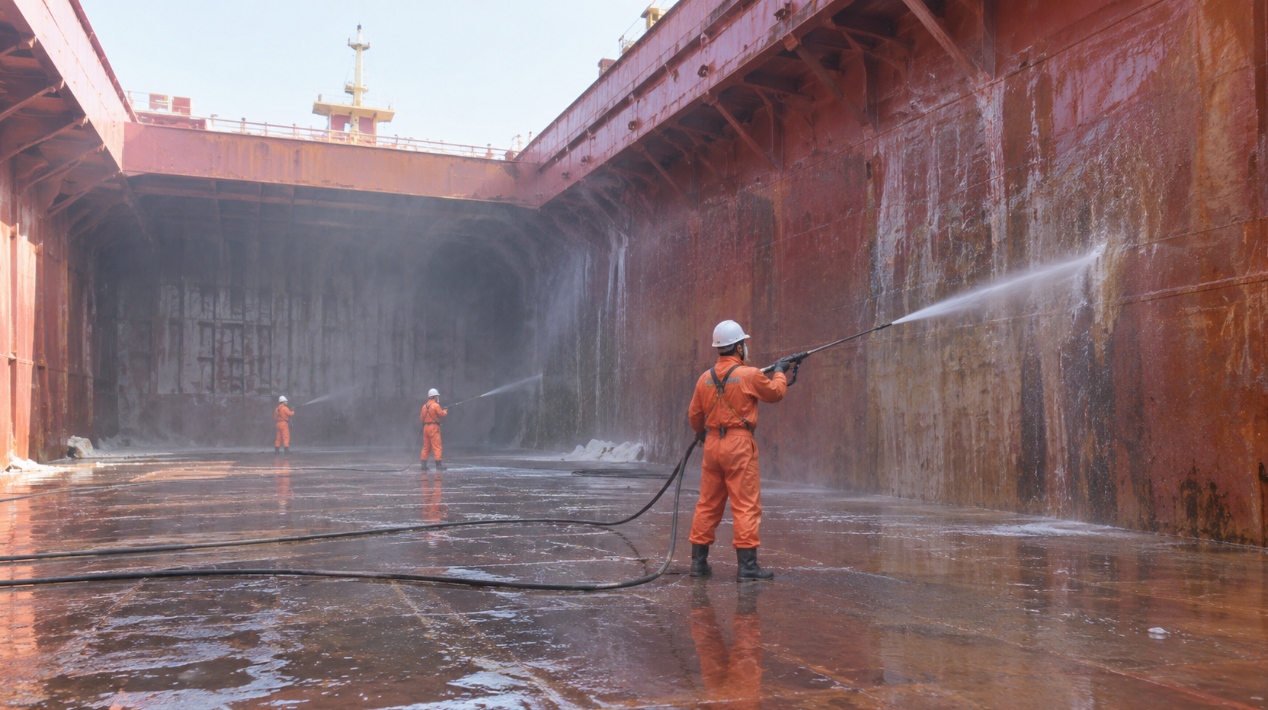
The most effective time to remove cargo residues is while bulk cargo is still being discharged. Loose grain, mineral dust, and cement fines can be swept or rinsed away before they become compacted against steel surfaces. If cleaning is delayed, moisture and pressure can cause residues to set firmly, requiring much more intensive washing afterward.
The crew should plan the cleaning order carefully: begin with the main hold surfaces, followed by ledges, underdeck beams, and hatch-coaming drainage channels. One important rule is often overlooked: never use compressed air to clear residues from drain channels. Blowing debris with compressed air can force fine particles deeper into bilge strainers, rose boxes, and drainage lines, causing concealed blockages that may only become apparent during the next loading voyage.
2. Bilge Well Cleaning: The Final, Essential Step
Bilge wells are the inspection point most likely to fail. The West of England P&I guidance recommends cleaning the bilges as the final stage of hold cleaning. Before washing, remove the bilge plates, strainers, and rose boxes to clear out trapped cargo particles. Thoroughly flush every internal surface of the bilge well.
Special precautions are necessary when handling cement cargo. Cement residues can harden quickly in fixed bilge pipes, rendering pumping systems inoperable. When carrying cement or other abrasive cargoes that set rapidly, air-operated diaphragm pumps are preferable for transferring wash water to avoid dependence on permanent bilge lines. Before loading food-grade cargoes, vessels must also disinfect bilge fittings and well interiors to remove biological contamination.
Once cleaning is complete, the crew must examine bilge-line non-return valves and isolating screw-down valves. Accumulated residue may prevent valves from closing securely, leading to backflow and moisture damage to the subsequent cargo. Record these inspections in the vessel’s planned maintenance system.
3. Washwater Management and Port Environmental Rules
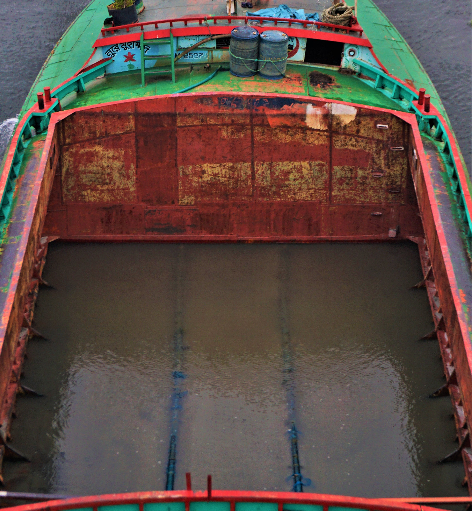
Wash water generated during hold cleaning is subject to MARPOL Annex V and local port environmental requirements. Many ports impose strict limits on discharging deck and hold washwater containing solid cargo residues overboard. Before beginning any washdown, vessels must verify the requirements of the port’s reception facilities.
Any washwater discharged overboard must contain no visible solids and must meet the requirements for the applicable local discharge zone. In many harbours, contaminated washwater must be kept on board and delivered to a shore reception facility. Failure to verify these requirements may lead to pollution fines, vessel detention, and complications with P&I claims.
4. Practical Checklist Before Inspection
- Remove residues during discharge, and do not use compressed air on drain channels.
- Clean bilge wells last, after dismantling and cleaning all strainers and boxes.
- Test bilge valves to identify any risk of backflow.
- Verify port restrictions on washwater discharge before washing.
- Check hatch coaming drains for trapped debris.
Conclusion
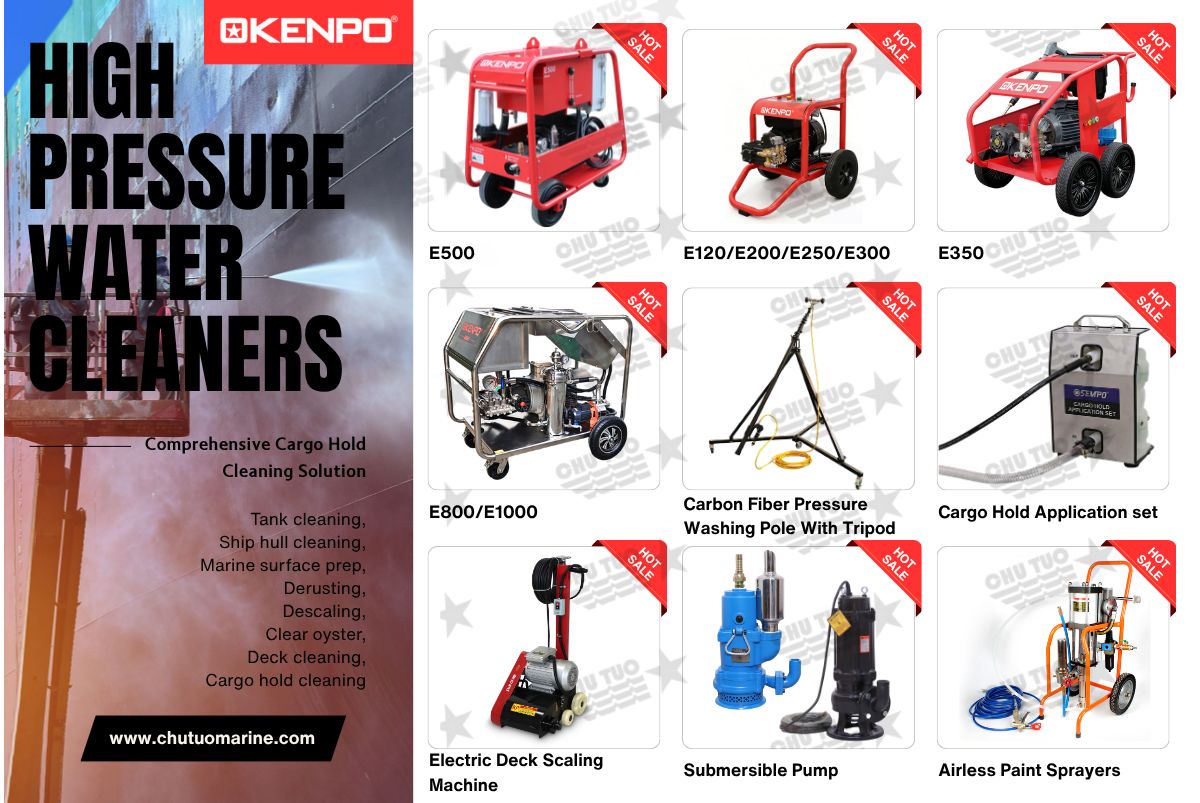
A systematic, risk-based cargo hold cleaning routine helps protect vessels from cargo claims, port penalties, and repeated inspection failures. Seemingly minor procedural errors, such as mishandling bilges or using compressed air incorrectly, can lead to persistent operational problems. Our range of marine equipment, including high-pressure washers and cargo hold chemical spray kits, enables crews to clean holds consistently, efficiently, and in compliance with requirements.

Post time: Nov-13-2026