




In contemporary maritime operations, safety, reliability, and adherence to environmental standards are no longer optional; they are imperative. A frequently overlooked yet critically significant element in mooring systems is the mooring winch brake lining. Specifically, non-asbestos brake linings have emerged as the industry standard due to their exceptional performance and alignment with global safety regulations. This article delves into the function, structure, and primary advantages of non-asbestos mooring winch brake linings, assisting shipowners and operators in comprehending the importance of this component.
What Constitutes a Mooring Winch Brake Lining?
A mooring winch brake lining is a friction material that is installed within the braking system of a mooring winch. Its main function is to generate controlled friction between the brake drum and the braking mechanism, enabling the winch to securely hold or release mooring lines under tension.
In practical terms, when a vessel is docked or anchored, the mooring winch brake lining guarantees that ropes or wires remain firmly in position, even when subjected to dynamic loads from waves, tides, or wind. In the absence of a dependable brake lining, the entire mooring operation would be jeopardized.
Why Opt for Non-Asbestos Materials?
Historically, brake linings were manufactured using asbestos due to its heat resistance and durability. However, asbestos is now widely acknowledged as a threat to human health and the environment. Consequently, international regulations—such as SOLAS amendments and IMO conventions—have prompted the transition to non-asbestos alternatives.
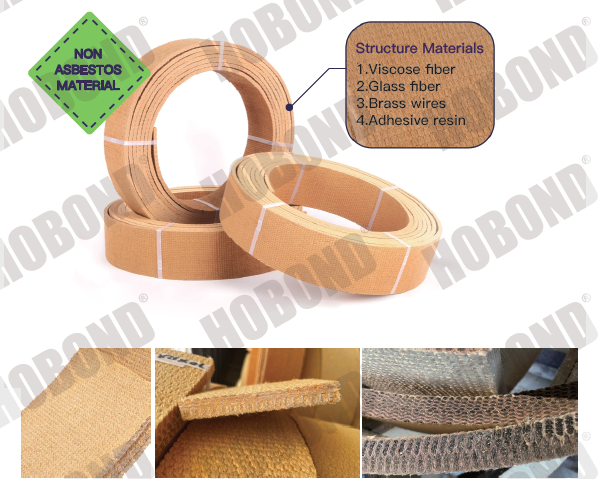
Contemporary non-asbestos brake linings are designed using advanced composite materials, which typically include:
1. Viscose fiber
2. Glass fiber
3. Brass wires
4. High-performance adhesive resins
This combination results in a dense, semi-flexible material that provides outstanding mechanical and thermal properties without the hazards linked to asbestos.
Core Functions of Non-Asbestos Brake Linings
1. Reliable Friction Performance
The main role of the brake lining is to deliver a consistent and predictable coefficient of friction. Non-asbestos linings ensure stable friction levels over a broad temperature spectrum, facilitating accurate control during mooring activities.
2. Load Holding Capability
Mooring systems experience substantial forces. Brake linings are required to endure high surface pressure while retaining grip. Non-asbestos materials demonstrate remarkable stability under load, preventing slippage even in challenging conditions.
3. Heat Resistance
Friction generates heat during braking. Non-asbestos brake linings are engineered to function effectively at standard temperatures up to 200°C and can tolerate instantaneous temperatures reaching 250°C, ensuring safe operation without deterioration.
4. Wear Resistance
Regular use can lead to wear and tear. High-quality non-asbestos linings are designed to resist abrasion, thereby prolonging service life and minimizing maintenance needs.
Key Benefits of Non-Asbestos Mooring Winch Brake Linings
1. Enhanced Safety
Safety is paramount in marine operations. Non-asbestos brake linings deliver reliable braking performance, mitigating the risk of sudden failures or uncontrolled line releases. Their consistent friction characteristics guarantee predictable operation in all scenarios.
2. Environmental Compliance
Non-asbestos materials adhere to international regulations such as:
1. IMO conventions regarding ship safety and recycling
2. ISO standards for material safety
3. SOLAS requirements
This positions them as a sustainable choice for shipowners seeking to comply with global environmental and safety regulations.
3. Superior Durability
Due to their composite structure, non-asbestos linings provide:
1. High resistance to heat
2. Strong mechanical integrity
3. Lower wear rate
This results in an extended service life and reduced replacement expenses.
4. Versatility Across Applications
While primarily utilized in mooring winches and windlasses, non-asbestos brake linings are also appropriate for:
1. Cranes and hoists
2. Drilling rigs
3. Industrial machinery
4. Elevators and mining equipment
This adaptability highlights their dependability across a range of heavy-duty applications.
5. Compatibility with Multiple Surfaces
Non-asbestos brake linings function effectively with prevalent materials such as cast iron and steel. For optimal performance, it is advisable to use mating surfaces with a hardness of 180 Brinell or greater.
6. Flexible Sizing and Easy Processing
These linings are available in a broad spectrum of thicknesses (5mm–30mm), widths (30mm–550mm), and roll lengths, allowing customization for various winch systems. They can also be processed with standard cutting tools, facilitating straightforward installation and maintenance.
Operational Considerations
To enhance performance, it is crucial to operate brake linings within the recommended limits:
1. Sliding velocity: below 12 m/s
2. Surface pressure: below 200 N/cm²
3. Temperature: within specified ranges
Moreover, friction performance may differ based on whether the system functions in dry or oil-immersed conditions, with reduced friction anticipated in oil environments.
Conclusion
Non-asbestos mooring winch brake linings signify a notable advancement in marine safety technology. By integrating high friction stability, exceptional heat resistance, and environmental compliance, they offer a dependable solution for contemporary vessels.
For shipowners and operators, investing in premium non-asbestos brake linings transcends mere regulatory compliance—it is about safeguarding the crew, cargo, and vessels in challenging marine settings. As the maritime sector continues to progress, these innovative materials will persist as a fundamental element of secure and efficient mooring operations.

Post time: Mar-19-2026