



For deck officers and ship managers, pilot ladders represent essential safety apparatus utilized during routine port operations. Personnel frequently encounter difficulties with cumbersome, rotation-susceptible ladders, concealed rope deterioration, inadequate step grip, ambiguous identification systems, and protracted verification procedures preceding pilot boarding. This article examines practical shipboard procedures, demonstrating how Good Brother pilot ladders diminish routine operational demands, streamline verification protocols, and ensure dependable functionality within demanding maritime environments.
1. Prevalent Onboard Difficulties Associated with Conventional Pilot Ladders
Standard pilot ladders present numerous operational challenges for deck personnel. Lower-grade models demonstrate excessive weight and rigidity, exhibiting rotation tendencies during installation. When subjected to load, steps shift laterally during vessel motion, establishing precarious conditions for pilots.
Conceal deterioration constitutes an additional substantial concern. Saline exposure and solar radiation compromise side rope integrity from interior surfaces, rendering internal degradation difficult to identify through visual examination. Timber steps experience warping, splitting, or become slippery following repeated moisture exposure. Numerous economical ladders incorporate paper identification systems that deteriorate or separate, complicating verification of production dates and regulatory compliance during formal inspections.
Inadequate preservation performance generates supplementary complications. Budget-conscious rope designs retain seawater, facilitating fungal development and decomposition absent thorough desiccation. Restrictive coiling produces enduring deformations that compromise fiber strength. These collective concerns may postpone pilot transfer operations or necessitate emergency substitution with backup ladders, intensifying safety considerations and operational strain.
2. Engineered Specifications of Good Brother Pilot Ladders
Good Brother pilot ladders incorporate engineering solutions addressing these recurring operational requirements.
2.1 Anti-Twist Structure for Quick Deployment
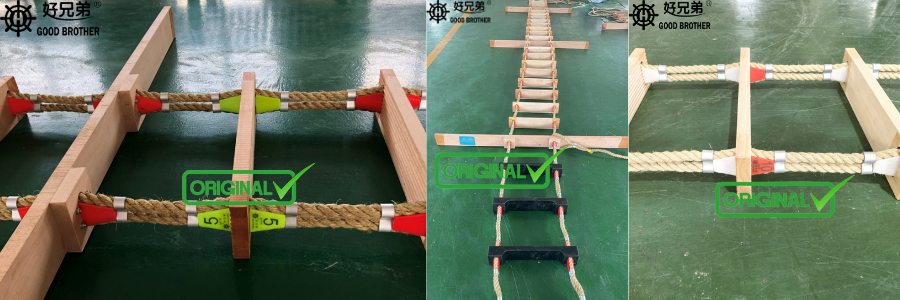
Our ladders incorporate stable, lightweight side ropes that coil compactly and facilitate easier transportation and rigging by crew members. The anti-twist construction maintains the ladder in a flat position against the hull without requiring frequent readjustment, even during vessel rolling at sea. Each step incorporates a locking chock mechanism to remain horizontal under load, providing pilots with secure footing. Spreader steps are pre-installed at SOLAS-compliant intervals, thereby preventing common rigging errors identified by PSC officers.
2.2 Low-Maintenance Anti-Slip Steps
Hardwood or composite steps incorporate integrated anti-slip textures. Paint is deliberately omitted from treads, as paint conceals cracks and becomes slippery when exposed to moisture. The material demonstrates resistance to saltwater erosion and warping. Following use, crew members need only perform a simple freshwater rinse. Smooth edges additionally prevent glove cuts during handling operations.
2.3 Permanent Weatherproof Marking
Each ladder features engraved, salt-spray resistant markings displaying batch number, production date and applicable compliance standards. Fragile paper tags are eliminated. During inspections, officers can efficiently cross-reference markings with certificates and update vessel PMS logs without additional effort.
3. Simplified Inspection & Maintenance Workflow
Good Brother ladders optimize your regular inspection procedures.
3.1 Pre-Use Quick Check (Before Pilot Transfer)
1. Inspect side ropes for cuts, abrasion and broken fibers.
2. Confirm all steps are level, with no cracked treads or loose chocks.
3. Check seizings and connections for looseness.
4. Verify spreader step spacing and product marking for service life status.
Remove the ladder from service immediately if any defect is identified, and deploy your spare unit.
3.2 Post-Use Care & Storage
Following recovery, rinse the ladder with fresh water to eliminate salt crystals. Allow it to dry completely in a shaded, ventilated location. Coil loosely to prevent sharp kinks, and store away from direct UV light, deck chemicals and hot exhaust sources. Appropriate storage practices substantially extend service life.
4. Troubleshooting & Fleet Supply Recommendations
During challenging sea conditions with significant wave action, the anti-twist mechanism preserves ladder integrity, although personnel must still affix it to designated robust attachment points on the vessel’s hull. When pilot boarding occurs with minimal advance notice, the reduced mass facilitates expedited deployment while minimizing crew exertion.
International maritime regulations mandate that all vessels maintain at least one certified replacement pilot ladder on board. Chutuomarine delivers comprehensive inventory solutions featuring standardized Good Brother ladder models tailored for fleet operations. Consistent design parameters enhance operational efficiency in crew instruction and inventory control across your entire fleet.
Summary
An effective pilot ladder transcends mere regulatory compliance; it substantially improves operational conditions for your deck personnel. Good Brother pilot ladders reduce deployment complexity, diminish routine maintenance requirements, and mitigate latent safety hazards. Through robust engineering and permanent identification systems, they enable commanding officers and senior deck officers to execute secure pilot transfer procedures and prevent unforeseen equipment complications at every port of call.

Post time: Oct-23-2026