



Cleaning cargo holds is a challenging and high-risk task that necessitates not only effective equipment but also strict compliance with safety protocols. The Cargo Hold Application Set, which is driven by a pneumatic diaphragm pump and engineered for efficient chemical application, provides a dependable solution for washing and rinsing cargo holds on small to medium-sized bulk carriers. However, as clearly stated in the operation manual, no cleaning operation should commence without the appropriate Personal Protective Equipment (PPE).
The instruction manual clearly indicates: Operators are required to wear the necessary PPE when utilizing this pump for chemical cleaning. The pump must never be operated without adequate protection. This is not merely a recommendation—it is a compulsory safety regulation.
Recognizing the Hazards in Cargo Hold Cleaning
Cargo holds frequently contain remnants of bulk materials such as coal, grain, fertilizers, minerals, or chemical substances. The cleaning of these holds generally involves the application of acids, alkalis, solvents, flammable materials, and specialized cleaning agents. Although the system is made from materials resistant to chemicals and is specifically designed for low-pressure chemical application, the substances being managed can present significant risks to human health.
During operation, chemicals are pressurized by the air-driven diaphragm pump and are sprayed through a telescopic pole—sometimes extending up to 8 meters or more—onto the vertical walls of the cargo hold. This top-down cleaning method can create mist, splashes, vapor, and airborne particles. Without sufficient protection, operators may face exposure to:
1. Chemical burns from acidic or alkaline solutions
2. Skin irritation or absorption of hazardous materials
3. Eye injuries from splashes
4. Respiratory damage from inhaling chemical vapors
5. Foot injuries due to slippery surfaces or falling objects
In light of these dangers, PPE is not optional—it is imperative.
Mandatory PPE Requirements
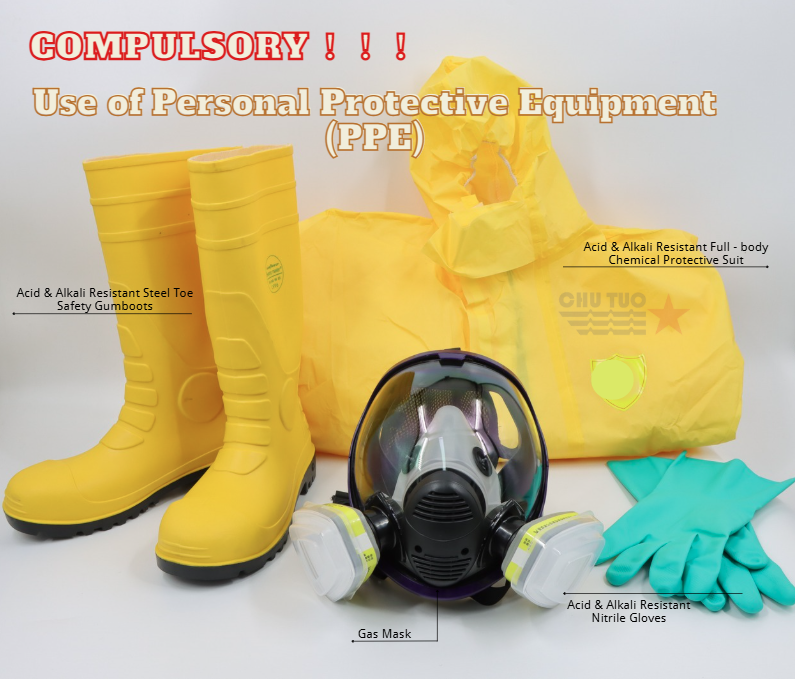
The operation manual outlines the essential protective equipment necessary for safe operations:
1. Acid & Alkali Resistant Full-Body Chemical Protective Suit
The full-body chemical protective suit acts as a barrier between the operator’s skin and hazardous cleaning agents. During the spraying process, chemical droplets may bounce off cargo hold surfaces or drip from overhead structures. Without comprehensive coverage, even minimal exposure can result in burns, irritation, or long-lasting skin damage.
Improperly donning protective clothing greatly diminishes its effectiveness. The manual explicitly states that liability will not be accepted for injuries resulting from incorrect procedures, such as wearing the suit incorrectly or leaving areas exposed. A well-fitted suit guarantees sealed protection around the wrists, ankles, and neck regions.
2. Acid & Alkali Resistant Nitrile Gloves
Operators’ hands are frequently in contact with hoses, valves, connectors, and the telescopic spray gun. Nitrile gloves that resist acids and alkalis are essential for preventing chemical penetration and skin contact.
Operators must confirm that the gloves are compatible with the chemicals being utilized. The manual specifically cautions against contact with incompatible chemicals while wearing gloves. Choosing the appropriate material and checking glove integrity before commencing operations are critical steps.
3. Acid & Alkali Resistant Steel Toe Safety Gumboots
Cargo hold floors may be wet, slippery, and contaminated with chemical residues. Steel toe safety gumboots fulfill two crucial roles:
Chemical resistance against splashes and pooling liquids
Impact protection from heavy tools, hose couplings, or equipment.
Worn-out rain boots or unsuitable footwear can jeopardize stability and heighten the risk of slips and falls. The manual stresses that improper use of protective footwear can lead to injury, and the operator bears responsibility if procedures are not adhered to correctly.
4. Gas Mask (Respiratory Protection)
The gas mask is arguably the most essential piece of personal protective equipment (PPE) during chemical cleaning operations. When chemicals are sprayed in confined or semi-confined cargo holds, concentrated vapor zones can form. Even when working from the deck area and utilizing ropes and pulleys to manage the telescopic pole, operators may still face exposure to airborne contaminants.
A gas mask that is properly fitted safeguards the respiratory system from inhaling harmful fumes. The manual explicitly cautions that failure to adjust face masks correctly may result in inadequate protection. It is imperative to ensure a proper seal and to utilize the appropriate filter cartridges designed for the specific chemicals involved as essential safety protocols.
Manufacturer’s Safety Disclaimer
The manual includes a robust liability statement: complimentary protective equipment is provided solely to facilitate safe operations and is not intended for commercial sale. Operators are required to adhere strictly to all instructions and safety precautions during the donning and use of the equipment.
The manufacturer disclaims any liability for protection failures or personal injuries that may arise from:
1. Incorrect donning of protective clothing
2. Improper adjustment of face masks
3. Use of ill-fitting protective footwear
4. Contact with incompatible chemicals
This underscores a vital message: Safety is a collective responsibility. Providing PPE is merely one aspect of the solution—its proper usage is equally crucial.
Incorporating PPE into the Cleaning Workflow
The cleaning process adheres to a systematic approach:
1. Identify cleaning zones of 3–4 meters
2. Commence from the highest elevation and progress downward
3. Conduct repeated cleaning cycles to fulfill required standards
4. Manage the telescopic pole utilizing rope systems
At every phase, PPE must be correctly worn and secured. Even during the assembly of equipment, installation of hoses, or maintenance tasks, operators should refrain from removing protective gear if there is a risk of chemical exposure.
Moreover, maintenance protocols necessitate the cessation of air supply and the venting of air lines prior to servicing. Equipment should be cleaned in areas with adequate ventilation, and flammable solvents like kerosene must be avoided. These measures further illustrate the overarching safety-first philosophy ingrained in the manual.
Safety Is Not an Accessory—It Is a Requirement
The Cargo Hold Application Set is designed for efficiency, reliability, and resistance to chemicals. Nevertheless, even the most sophisticated system cannot mitigate risk without appropriate human protection. PPE serves as the final and most essential barrier between hazardous chemicals and the operator.
In marine operations, the pressure of time and operational demands may lead crews to consider shortcuts. However, in the context of chemical cargo hold cleaning, no compromise is acceptable. The instruction manual explicitly states: Never operate the pump without adequate protection.
By rigorously following PPE protocols—wearing acid-resistant suits, nitrile gloves, steel-toed gumboots, and properly fitted gas masks—operators not only adhere to the manufacturer’s recommendations but also safeguard their health, their crew, and the vessel itself.
In cargo hold cleaning, efficiency is important—but safety is always the priority.

Post time: Feb-26-2026