




Cleaning the cargo hold is a routine yet high-risk task aboard bulk carriers. The application of chemical cleaning agents, the use of pressurized air systems, and the presence of elevated work areas necessitate strict compliance with safety protocols. Whether utilizing the 1-inch or 1/2-inch cargo hold cleaning kit, operators are required to observe appropriate precautions to ensure effective cleaning while safeguarding personnel, equipment, and the vessel.
This article outlines essential precautions for usage, derived from the official instruction manuals, and aims to assist shipowners, operators, and crew members in executing cargo hold cleaning operations safely and accurately.
1. Review and Comprehend the Instruction Manual before Use
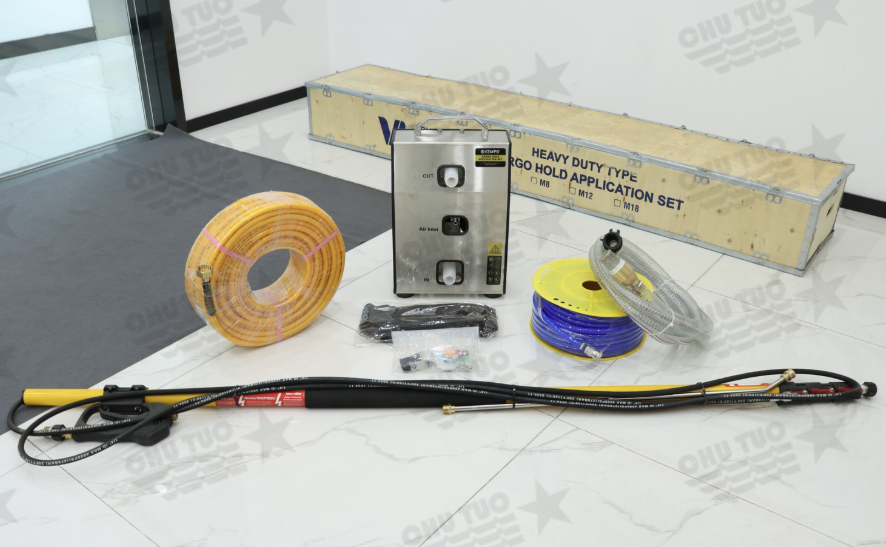
Prior to utilizing the cargo hold cleaning kit, all personnel involved must thoroughly read and comprehend the instruction manual. The system is intended for low-pressure chemical application and should only be operated within its designated limits. Misuse, incorrect assembly, or deviation from the recommended procedures may lead to equipment damage, chemical exposure, or personal injury.
Only trained personnel should handle the equipment, particularly when chemical cleaning agents are in use.
2. Compulsory Use of Personal Protective Equipment (PPE)
Chemical cleaning operations present direct hazards to the skin, eyes, and respiratory systems. The manuals explicitly state that the pump must never be operated without appropriate PPE. The necessary protective equipment includes:
• Nitrile gloves resistant to acids and alkalis
• Full-body chemical protective suit
• Steel-toe safety gumboots resistant to acids and alkalis
• Gas mask or suitable respiratory protection
All PPE must be donned correctly and adjusted properly before commencing work. Incorrectly worn protective clothing, ill-fitting masks, or the use of incompatible gloves may significantly diminish the effectiveness of protection. The manuals stress that neglecting PPE protocols can lead to severe injury and that the operator bears the responsibility.
3. Monitor Operating Pressure and Temperature Limits
The cargo hold cleaning kits are specifically designed for low-pressure operation only. The maximum recommended operating pressure is 100 PSI (8 bar). Surpassing this limit may result in damage to the pneumatic diaphragm pump, hoses, or spray components, and could potentially create hazardous spray conditions.
Furthermore, the system should only be utilized within an ambient temperature range of 0°C to 40°C (32°F to 104°F) in hazardous environments. Operating outside of this specified range may adversely affect pump performance and the integrity of materials.
4. Utilize Only Compressed Air as the Power Source
Both the 1-inch and 1/2-inch systems are driven by air and must be powered solely by compressed air. The use of any other gases or power sources is strictly prohibited. Air supply lines connected to the pump should match the size of the inlet port or be one size larger to ensure stable performance and appropriate speed control.
To avoid overheating, the air motor should be turned off for 15–30 minutes after every 8 hours of continuous operation.
5. Ensure Proper Assembly and Secure Connections
Prior to commencing any cleaning operation, verify that all components are correctly assembled:
• Securely attach the chemical discharge hose between the pump and the telescopic spray gun.
• Install the appropriate spray nozzle for the specific cleaning task.
• Ensure the suction hose is correctly positioned inside the chemical drum.
• Confirm that all quick couplings are fully engaged.
Loose connections can result in leaks, pressure loss, or chemical splashing, thereby increasing the risk of injury and reducing cleaning effectiveness.
6. Adhere to Correct Cleaning Operation Procedures
Cleaning should consistently be performed using a top-down approach. The cargo hold should be segmented into cleaning zones approximately 3–4 meters wide, with each zone being cleaned multiple times to guarantee sufficient chemical coverage.
Operators must cease cleaning upon reaching the lower hopper area, which is approximately 3 meters below the top of the vertical surface, and must adjust the telescopic pole length prior to proceeding to the next zone. This approach enhances safety, guarantees uniform cleaning, and minimizes operator fatigue.
7. Chemical Handling and Dwell Time Awareness
The dwell time for cleaning chemicals may vary from 10 minutes to 2 hours, contingent upon the specific chemical utilized and environmental factors such as temperature and humidity. Operators are required to adhere to the recommendations provided by chemical suppliers and to avoid extended exposure that could potentially harm coatings or steel surfaces.
The materials incorporated in the cleaning kits are appropriate for acids, solvents, flammable liquids, and cleaning agents; however, compatibility must always be confirmed prior to use.
8. Maintenance and Post-Operation Safety
Before undertaking any maintenance or cleaning of the equipment:
• Completely disconnect the air supply
• Vent all air lines to eliminate residual pressure
• Clean the equipment in a well-ventilated environment
Flammable solvents, including kerosene, must never be utilized for cleaning the equipment. Proper maintenance prolongs the lifespan of the equipment and ensures safe operation during subsequent use.
Conclusion
The 1-inch and 1/2-inch cargo hold cleaning kits are dependable and effective tools when employed correctly. By rigorously adhering to operating limits, donning appropriate personal protective equipment (PPE), and following proper cleaning and maintenance protocols, operators can significantly mitigate risks while achieving successful cargo hold cleaning outcomes.
Complying with these precautions is not merely a matter of regulatory adherence but represents a commitment to onboard safety, equipment durability, and professional ship maintenance.

Post time: Feb-05-2026