



Introduction
Preparing a cargo hold involves much more than washing its surfaces. Inadequate cleaning can contaminate cargo, result in failed surveys, cause expensive port delays, trigger P&I claims and increase downtime. Crews often rely on informal routines and miss important checkpoints that surveyors examine. A systematic top-down cleaning process, combined with appropriate testing and drying, helps vessels pass inspections, protects cargo and keeps operations on schedule. This guide presents practical, proven procedures that deck teams can use on site.
1. Follow the Top-Down Cleaning Principle
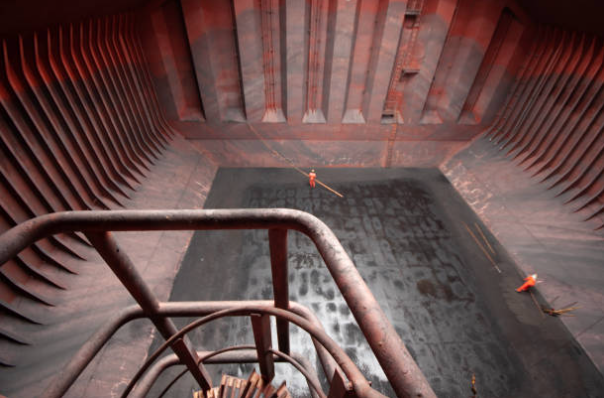
The fundamental rule of cargo hold cleaning is straightforward: work from the top down. Clean overhead structures, deck beams, the undersides of hatches and the upper parts of bulkheads before addressing tank tops and bilge wells. Cleaning in the opposite order allows loose residue, dust and wash water to fall onto surfaces that have already been cleaned, spreading cargo debris across steel plates and forming stubborn deposits that take additional labour to remove.
Start by removing dry material. Use shovels, stiff-bristled brooms and scrapers to clear bulk grain, ore, cement or fertilizer residues. Dry sweeping reduces the amount of waste before water is used and prevents fine particles from becoming a thick slurry that clings tightly to steel. Gather all solid debris and dispose of it in accordance with applicable local MARPOL regulations.
2. High-Pressure Washing and Targeted Chemical Treatment
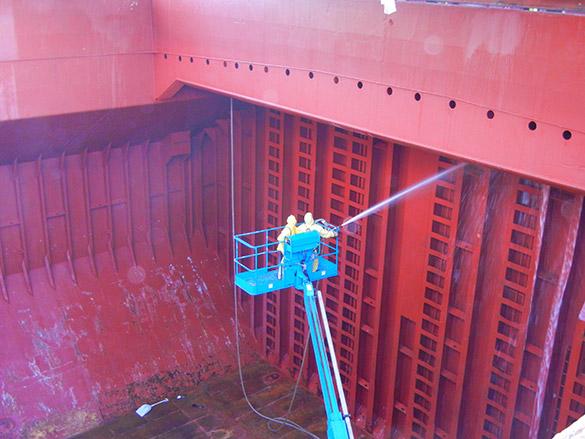
Once dry pre-cleaning is complete, proceed with high-pressure rinsing. Select the pressure and nozzle type according to the cargo and the condition of the steel. Standard high-pressure freshwater washing is adequate for light residues. Hardened mineral deposits, salt encrustation and persistent traces of chemical cargo require controlled use of cleaning chemicals.
Apply cleaning agents uniformly instead of spraying them indiscriminately. Allow sufficient dwell time for the chemicals to dissolve deposits before rinsing. Do not skip this waiting period: rushing the chemical treatment can leave invisible residues that may cause later tests to fail. Contain and manage all wash water appropriately, and keep bilge suction running continuously to prevent water from pooling inside the hold.
3. Residue Verification: Chloride Testing with Silver Nitrate
Visual inspection alone is not dependable. Even when the steel appears clean, invisible chloride residues from salt cargoes or seawater washing remain a significant risk for corrosion and contamination, particularly for sensitive cargoes such as steel coils, food-grade goods, and alumina.
The silver nitrate chloride spot test is the industry-standard method. Take water-swab samples from several representative locations, including bulkheads, corners, the tank top, and bilge areas. A positive result indicates residual chlorides and makes re-cleaning mandatory before the survey. Document the results for the surveyor to review. This straightforward check significantly reduces the risk of hold rejection.
4. Ventilation and Drying — The Final Critical Step
A washed hold is not ready until it is completely dry. Moisture left in corners, beneath stiffeners, and in bilge wells can accelerate rust formation. After rinsing and testing, start forced ventilation. Monitor the humidity inside the hold and continue air exchange until the steel surfaces are dry to the touch, with no damp patches or condensation.
Do not close the hatches immediately after cleaning. Closing them too soon traps humid air, and overnight condensation can undo hours of work. Include drying time in the port schedule to prevent last-minute hold defects.
5. Common Pitfalls to Avoid
- Skipping dry sweeping and beginning with water
- Applying cleaning chemicals without allowing adequate dwell time
- Overlooking concealed areas, including the backs of stiffeners, pipe undersides, drain channels, and bilge corners
- Depending solely on visual inspections and omitting chloride testing
- Providing insufficient ventilation, which can cause condensation and flash rust
Conclusion
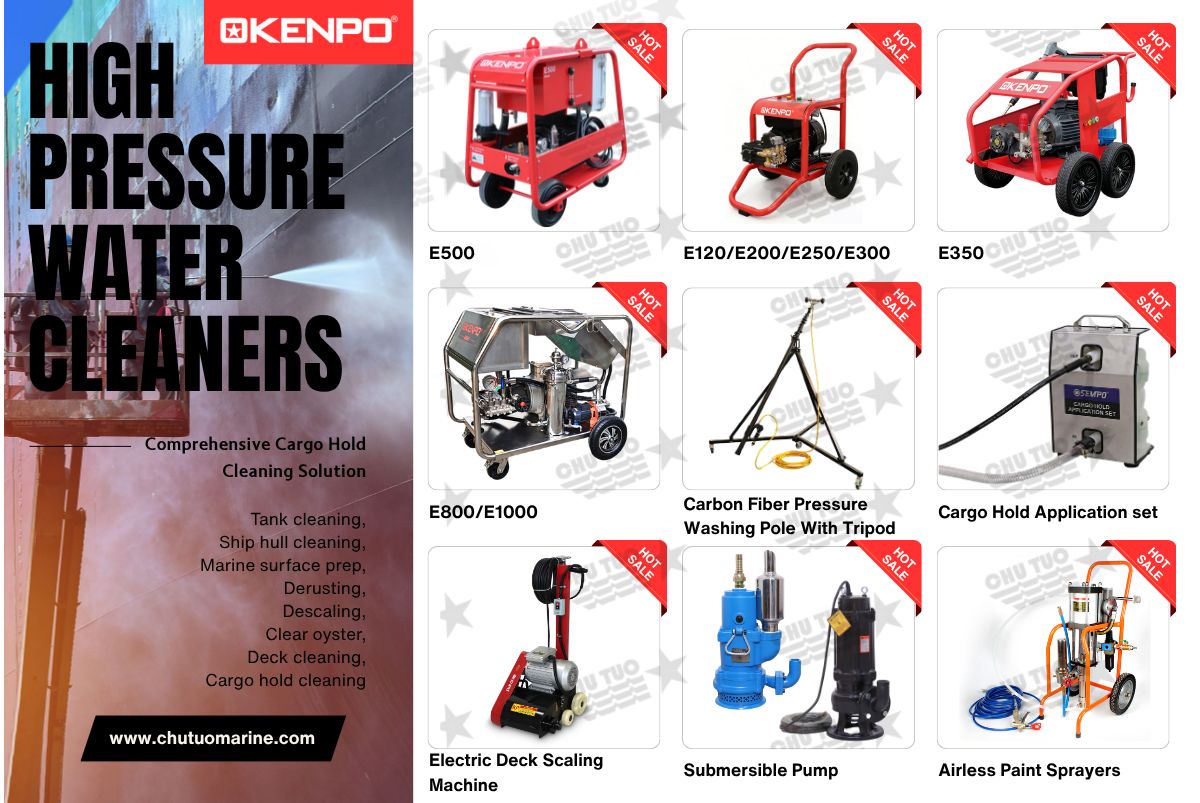
A structured cleaning process that proceeds from top to bottom and starts dry, complemented by chemical treatment, chloride testing, and adequate ventilation, is the most reliable way to prepare cargo holds for surveys and subsequent loading. Consistent application reduces claim risks and helps shorten port turnaround times. Our marine high-pressure washers and cargo hold chemical spray kits are designed to support this standard cleaning process aboard dry bulk vessels.

Post time: Nov-24-2026