




1. Fundamental Operating Principle of the Venturi Blowers
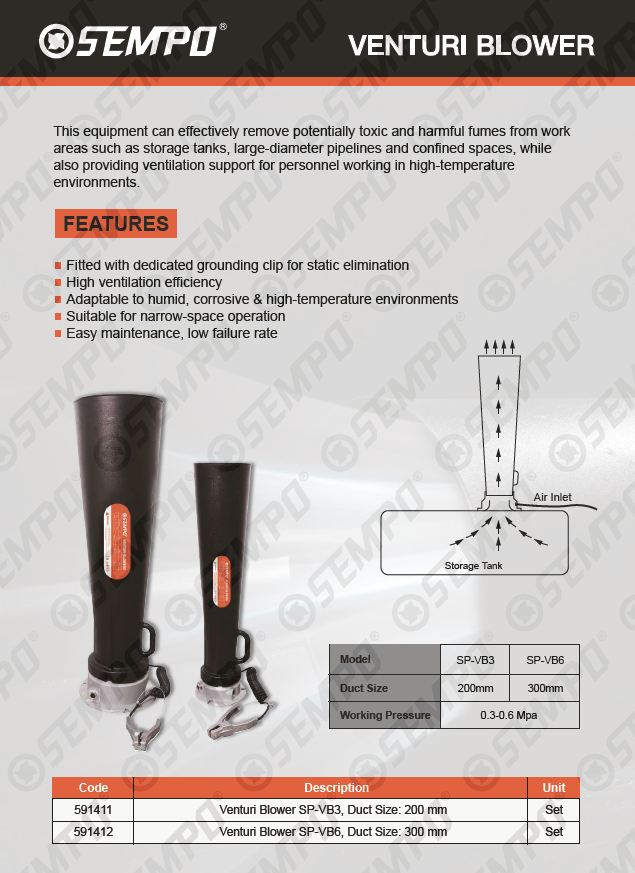
In contrast to traditional rotary fans that utilize impeller blades to move air, a venturi blower functions based on the venturi effect. Compressed air is introduced through internal nozzles at high speeds. The rapid airflow generates negative pressure within the device, which draws in significant amounts of surrounding static air into the flow channel. The mixed air is continuously expelled to facilitate air circulation.
This pneumatic design eliminates the need for rotating components. The fan body does not include a motor, bearings, or delicate blades, which significantly reduces the risk of mechanical failure during prolonged operation.
2. Distinct Advantages for Challenging Working Environments
Safety is its foremost advantage. With no electric driving components, the venturi blower can operate safely in flammable, explosive, and humid conditions where electric fans are not permitted. It prevents sparks that may arise from motor operation, making it suitable for marine cabins, chemical storage areas, and enclosed tank cleaning situations.
The lightweight design allows for flexible deployment. Most models are constructed from durable cold-rolled steel and have compact dimensions. Operators can quickly relocate and secure the fan without the need for complex installation frameworks. In shipyard operations, crews frequently deploy multiple units at once to enhance air exchange within cargo holds.
Minimal maintenance is another significant advantage. There are no moving parts that wear out and require regular lubrication or replacement. Daily inspections are limited to the air inlet and outlet to remove any blockages, which greatly reduces long-term operational costs.
3. Common Marine & Industrial Application Scenarios
Venturi blowers are extensively utilized in global shipping and heavy industries. On ships, they provide forced ventilation during tank cleaning, bilge space ventilation, and the renewal of air in enclosed cabins. Efficient air exhaust eliminates harmful volatile gases and stale air, ensuring the safety of onboard personnel.
In the land-based industrial sector, these fans are employed in confined-space operations such as pipeline maintenance, underground tunnel ventilation, and air circulation in hazardous waste workshops. They are particularly effective for short-term ventilation tasks that require rapid setup and high mobility.
4. Selection & Operation Recommendations
When selecting a Venturi blower, it is essential for buyers to align the air output with the available compressed air supply pressure. Consistent air pressure is crucial for maintaining stable negative pressure and ensuring ventilation efficiency. Users should inspect pipeline connections to avoid air leaks, as these can significantly diminish airflow performance.
For marine applications, it is advisable to choose fans with corrosion-resistant surface treatments to withstand the erosive effects of seawater mist. Regular cleaning of surfaces is important to prolong the service life of the equipment in coastal, high-salinity environments.
Conclusion
As a blade-free pneumatic ventilation solution, the venturi fan offers a combination of safety, portability, and low maintenance costs. It acts as a dependable supplementary ventilation device for high-risk enclosed spaces, particularly in compliance with the stringent safety standards of international marine operations. For businesses engaged in confined-space ventilation tasks, it presents a viable alternative to conventional electric ventilation systems.

Post time: Aug-05-2026